



Drop Shot Popularity On Rise
How To Fish A Split Shot Rig
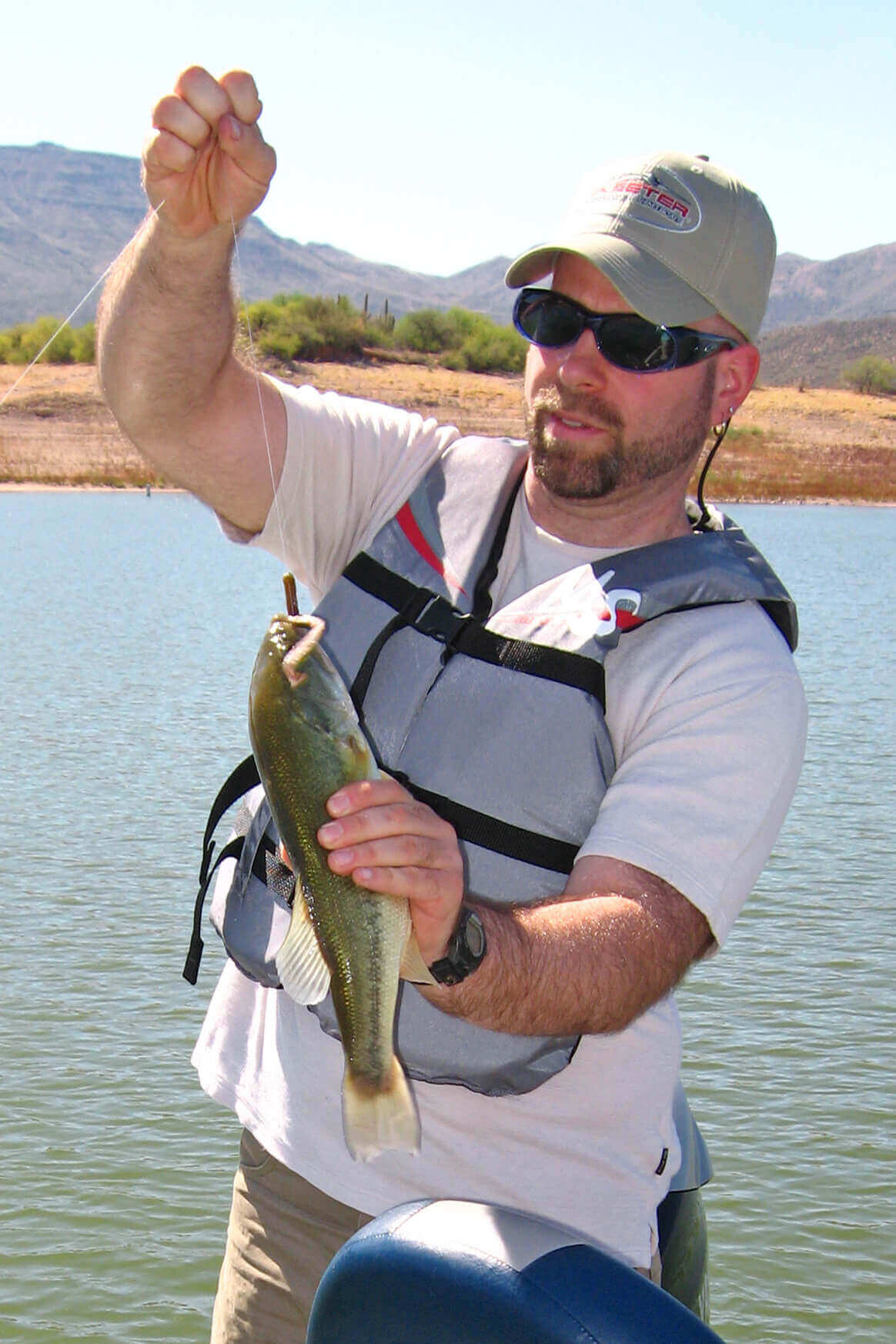
The rise in popularity of the drop shot technique has put split shotting on the back burner for many anglers. In many ways, drop shotting is much easier; with a drop shot rig, the bait is between you and the weight, so you feel the fish before you feel the weight.
But, a drop shot rig is primarily a vertical presentation – something you use when you already know the fish are down there. With a split shot rig, you can move around more and search for the fish. It just works too darned well to give up entirely, especially when it s so tough that nothing else seems to catch fish.
Arizona split shot expert Gregg Warne says, “I can’t tell you how many times I ve gone down a bank right after another angler and caught fish that he missed. When the bite is tough, people start to get desperate, and they tend to go faster without really meaning to, trying to find and catch some fish.
What they really need to do is slow down. A split shot rig is perfect for those times.”
Gear
Since you usually have a lot of line out, you need a fairly stiff rod or you can’t set the hook. Your reel needs to take up a lot of line quickly, and a good drag is essential.
The line itself needs some stretch, but not too much. Fluorocarbon line is excellent for split shot rigs. It lets you set the hook quickly and the fish can’t see it; it’s the perfect stuff for finesse techniques.
Terminal tackle is crucial. The hook needs to be fine and very sharp, able to penetrate and hold even when the hookset is nothing more than steady pressure. Warner uses Gamakatsu hooks in sizes 1, 1/0, and 2/0, sized to the bait he s using.
Obviously, with a larger bait, you need a larger hook so you have plenty of bite. Weights are important, too. A regular lead split shot that is crimped on the line can make fluorocarbon line break if you’re not careful.
Try Mojo weights or small bullet weights instead, and hold them on the line with a rubber nail. If you do opt for mono and lead split shots, get the kind without the “ears.” Those ears are designed to let you remove the shot, but they add a lot of spin to the lure, resulting in annoying line twist.
Split shotting is a tight line finesse technique. Warne uses the lightest weight that he can possibly get away with just enough to keep the weight on the bottom. Contact with the bottom is critical to his success, because that show he feels pick-ups and bites.
“With a split shot rig you don’t want commotion,” he explains, “you want subtlety. So keep the weight as small as possible, but keep your line taut so you can feel what is going on down there all the time.”
How To Fish It
Once he’s decided on split shotting, Warne starts out hoping for a relatively aggressive bite. This means a bit heavier shot and steady pace. If there is a good breeze, he says, this usually means the bite will be a little better. You can just let the wind push you along.
On a dead calm day on a lake full of fish with lockjaw, he lightens up the weight and moves the bait as slowly as possible, moving it just one to three inches at a time. In between those extremes there is an almost infinite variety of speeds and retrieves that will catch fish. Somewhere on the way from fast to excruciatingly slow you’ll start catching fish, he says. Stick with that retrieve until it quits working. Since the weight is held in place with a rubber nail, you can move it whenever you feel it’s necessary. When he’s fishing in 15 feet or less, or when the fish are right on the bottom, Warne leaves about a foot between the hook and the split shot.
If The Fish Are Off The Bottom
If the fish are a bit off the bottom, or he’s fishing more than 20 feet deep, he puts the split shot around 18 inches from the bait. When things really get tough, like when the fish are suspended or a front has just moved through, he’ll use a leader as long as two or three feet.
“The bait rises up as you move the rig,” he says, “then it starts to sink slowly down when you stop. The tougher the bite, the more slowly you want the bait to sink.” In really tough times, it can take him three hours to go 100 yards!
With the drag set tight, Warne drops the split shot rig over the side and lets it fall to the bottom on its own. This seems to result in fewer hang-ups and snags than casting it does, he says. He holds his rod very loosely, with the rod tip pointing toward the bait.
If you hold the rod too tightly, the fish feels pressure as soon as he bites, and he’ll drop the bait. Warne lets the rod almost dangle from his fingers, and he concentrates on feeling the rig through the rod.
When he detects a bite, whether from weight or from lack of weight, he lets the fish run with it for a few seconds, then sets the hook by sweeping the rod sideways all the way around until it’s pointing behind him, reeling all the while.
Sweeping the rod this way gives you two entire rod lengths of hookset. This is plenty to take up the slack line and get a sharp hook into the fish, especially since you’re reeling the whole time. Once you get the fish on, keep steady pressure on it.
Credit Where Credit Is Due
After the initial set, Warne will often loosen the drag up a bit, especially on a bigger fish. “Once you’ve got that fish coming at you,” he warns, “don’t let up or start switching the rod from side to side, because that’s when you’ll lose him.”
“You want to keep him coming the same direction until you’ve got him in. Don’t give that hook a chance to fall out or work loose.”
In the many years that Gregg Warne has been fishing professionally, he has learned to use a ton of baits and different techniques. But, he still finds himself going back to split shotting when all else fails.
In spite of all the “new” methods out there, the split shot rig still delivers when times are hard. He gives credit where credit is due, and remembers the legendary Art Porter with fondness.


